This article features the findings of 1,056 respondents who shared their shidduch experiences. Though each experience is deeply individual, we sought to uncover key patterns and behaviors that drive decisions, expectations, and beliefs.
Below we outline the demographics of the Shidduch survey participants. Community affiliation, gender, and life stage play a pivotal role in understanding the insights that follow.

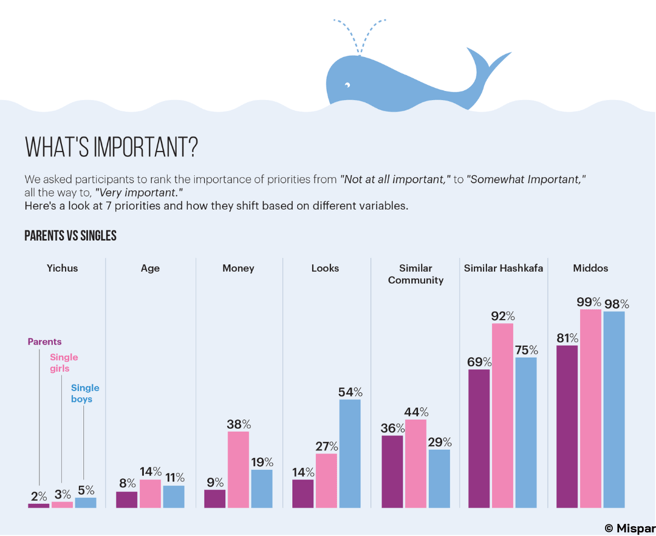
What Matters Most: Parents vs. Singles
There are so many motivations and aspirations that drive singles and their parents to decisions in Shidduchim. In an effort to understand what each group wants most, we compare the ranking of different priorities submitted by parents and singles.
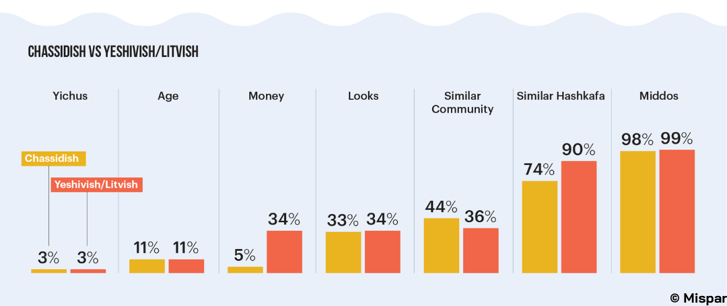
Chassidish vs. Yeshivish / Litvish Sentiments
Those who are familiar with different communities are well aware of main differences between them. Here we zoom in on the level of importance of different sentiments in the Chassidish versus Yeshivish/Litvish population. While most priorities are similar across both affiliations, there is a striking contrast in the financial factor.
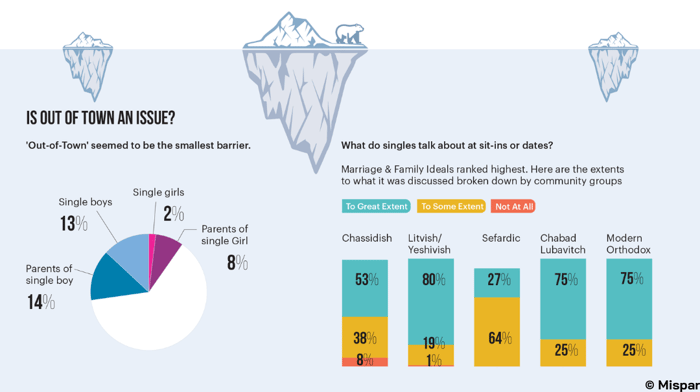
Potential Barriers & Pre-Marriage Topics
Participants rated the extent to which potential barriers matter to them. We also touched on personal topics that impact marriage to understand how, if, and to what extent they are discussed prior to engagement.
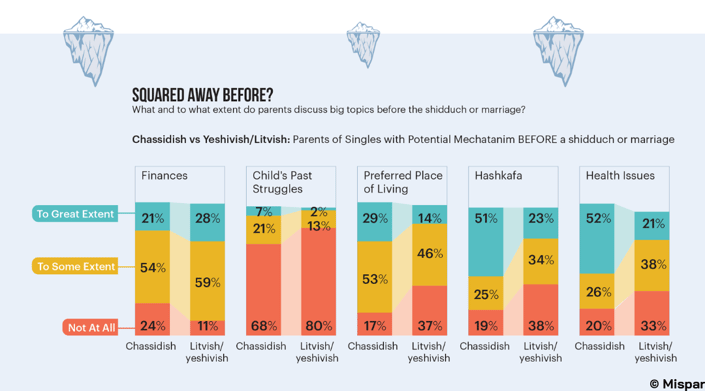
Information Sharing Between Parents
It is interesting to notice how different communities go about sharing information before marriage. Here we compare the extent of conversations between parents of the Chassidish and Yeshivish/Litvish communities.
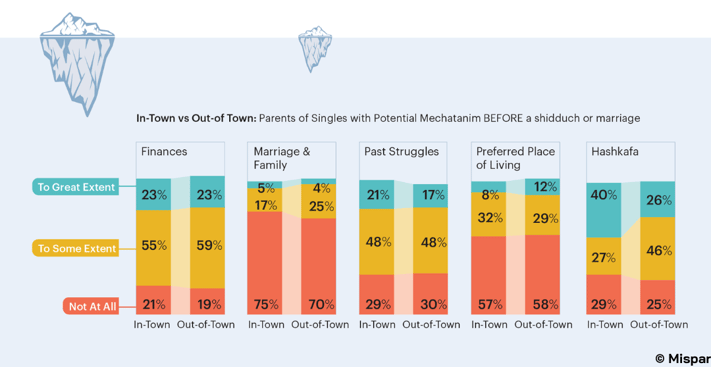
In-Town vs. Out-of-Town Conversations
In the following graph we compare the extent of conversations between potential Mechatunim who live In-town versus Out-of-town. The differences may seem small, yet they indicate subtle geographic nuances.
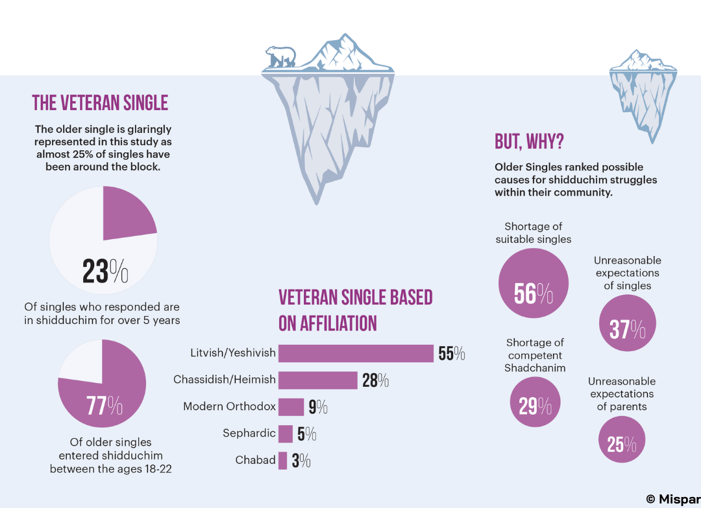
Age Dynamics & Older Singles Insights
We asked singles in Shidduchim for their current age and the age they entered the Shidduch scene, as well as their opinions on community struggles. This offered us valuable insight about those in Shidduchim for a longer duration.
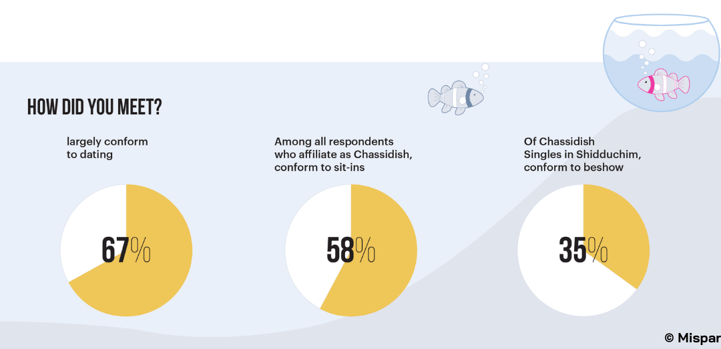
The Meeting Process: Dating vs. Beshows
We explore the meeting process—dating or beshows? The breakdown below informs the responses that follow regarding meeting formats.
Picture Requests & Experience Ratings
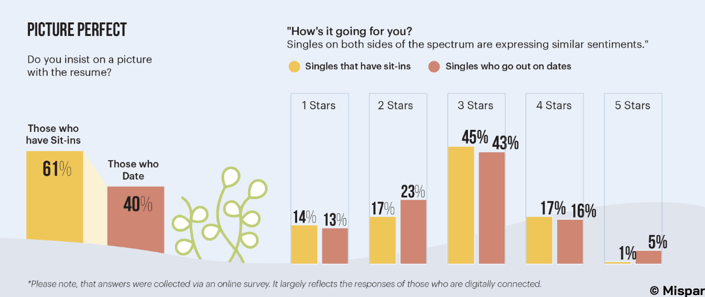
We asked about prerequisites before meeting, and noticed a clear contrast between those who have beshows versus those who date when requesting pictures of a match. Interestingly, both groups rate their overall experience similarly on a 1-to-5 star scale.
Starting Age & The Age Gap Crisis
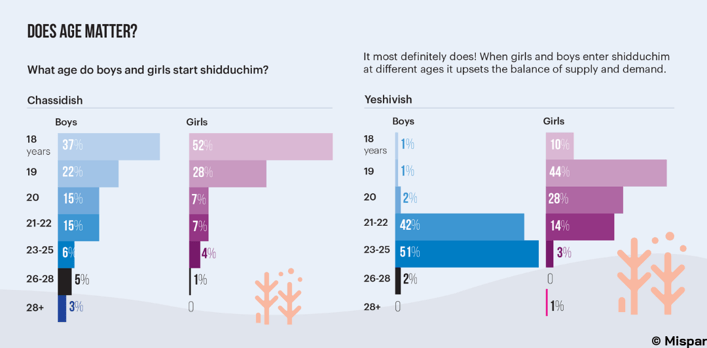
The chart below shows the starting age for Shidduchim, comparing Chassidish and Litvish participants. The contrasts highlight how this dynamic affects the age gap, widely believed to contribute to the Shidduch crisis.
Years Spent in Shidduchim
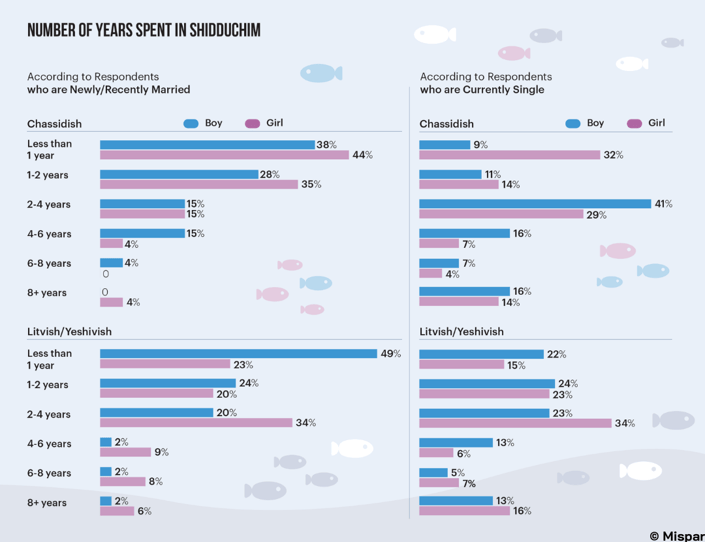
We compare the duration newly married respondents spent in Shidduchim to those currently in Shidduchim, separating Chassidish and Yeshivish groups. The comparison reveals a stark contrast between young men and women in each group, alongside a recent increase in waiting times for Chassidim.
Matchmaking Effort & Collaboration
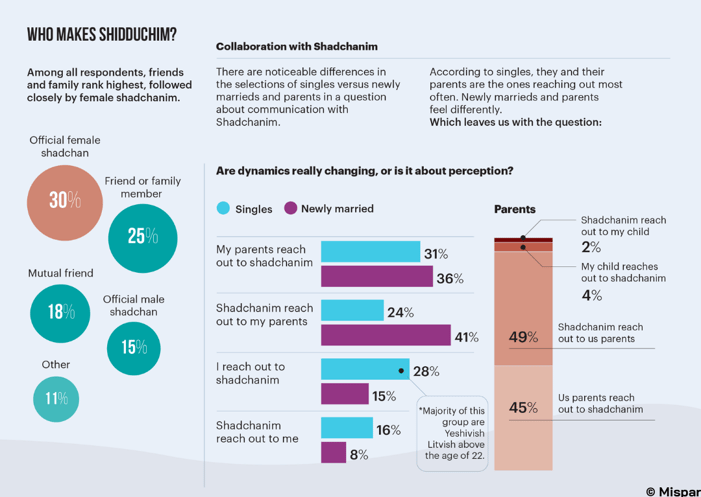
We explore the human effort involved in Shidduchim and collaboration between different parties, pointing out varied responses from each group and tracking changing patterns over time.
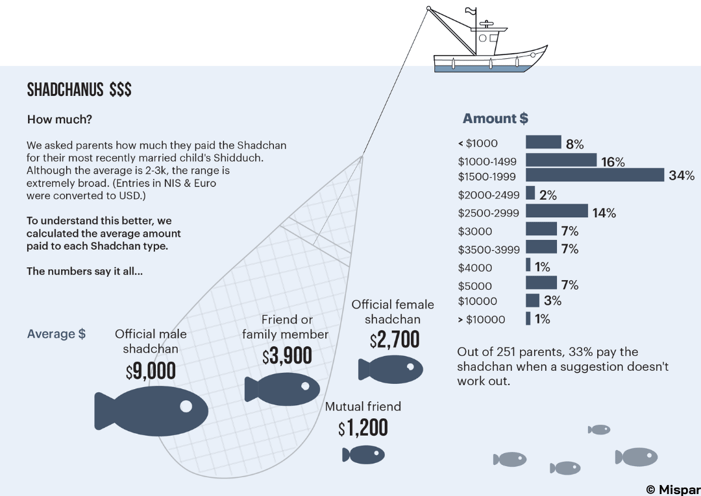
Shadchan Payment & Compensation Rates
We inquired about how much parents paid the Shadchan for their most recently married child. The data below breaks down the numbers by Shadchan type, indicating glaring differences between groups.
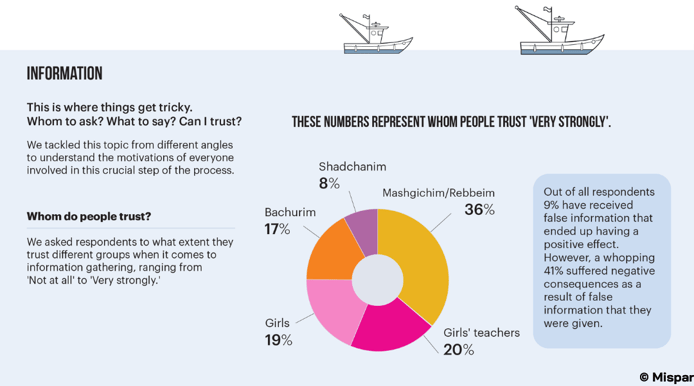
Information Gathering & Trust Patterns
Information gathering is a major component in Shidduchim. We delved into it with questions for both seekers and providers. Are trust issues unfounded? We explored how people navigate information sharing and discovered surprising patterns.

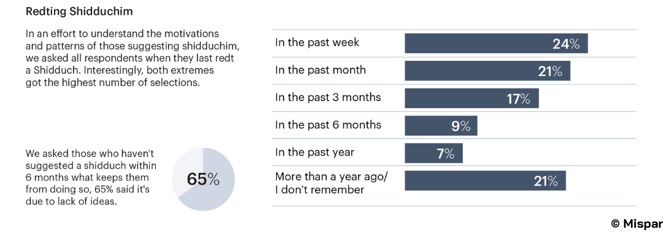
Community Redting & Shadchan Challenges
The charts below illustrate community involvement in suggesting matches (redting) and highlight key obstacles facing Shadchanim today.
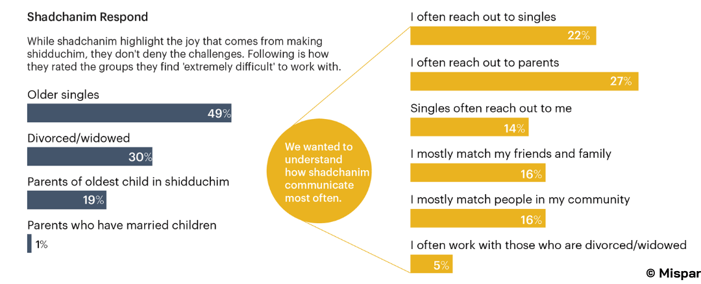
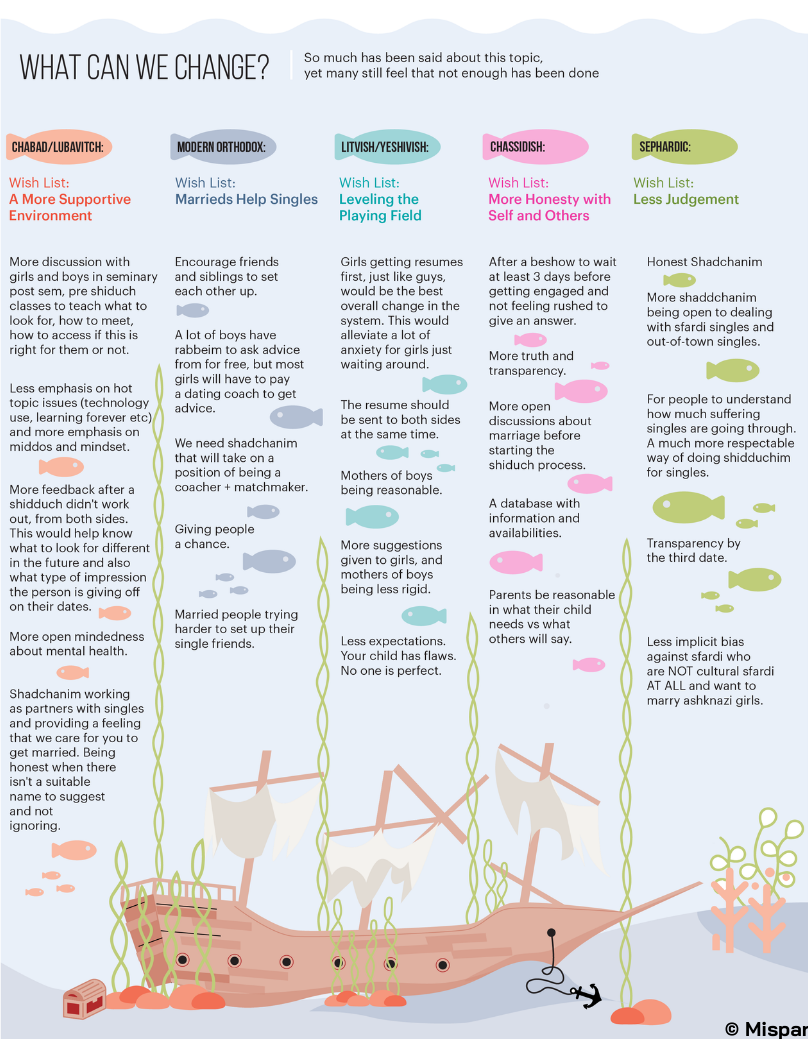
Community Voices & Desired Changes
We turned to participants to share their voices and express hopes for themselves, their families, and communities. We categorize responses by community, reflecting unique sentiments from each group.
Conclusion & Call for Action
The purpose of this study is to explore patterns and observations on the critical topic of Shidduchim within the Orthodox Jewish community. We share it to spark meaningful conversations and initiate positive change. Thank you for doing your part in investing in this cause. We hope you found the results as fascinating as we did.


Written by Dina Goldman
Research AnalystIndustry research analyst and strategist at Mispar, specializing in compensation benchmarks and market intelligence.